




erase the case logo

Survey Found: 1 in 2 Floridians Don’t Know Arrests Stay Public for Life.

In September 2025, we surveyed 600 Florida residents to understand awareness of expungement laws and public support for reform. We launched this survey to highlight widespread misconceptions and provide timely insights that can inform policymakers, advocates, and the broader second-chance movement.
Explore Now

Expungement is at the heart of the second-chance movement in Florida and the Clean Slate reforms spreading nationwide. Florida’s Senate Bill 1000 (SB 1000) aimed to expand access by allowing more than one case to be sealed when charges are dismissed after having already expunged or sealed one record, but the proposed bill died in the 2025 Florida Legislature's appropriations committee on criminal and civil justice.

To better understand where Floridians stand, Erase The Case launched an online survey of 600 Florida residents in September 2025 using Pollfish. The results uncovered surprising gaps in public knowledge, including the fact that more than half of respondents don’t know dismissed arrests remain public for life, and revealed strong support for reform, with a majority backing multiple expungements.

These insights highlight both the urgent need for public education and the momentum for reform in Florida, offering valuable guidance for policymakers, advocates, and communities seeking fairer opportunities.

Key Findings

  • 1 in 2 Floridians don't know an arrest record can stay public for life, even if charges are dismissed.
  • 23% of Floridians are shocked that they can only expunge once, even if charges do not result in a conviction.
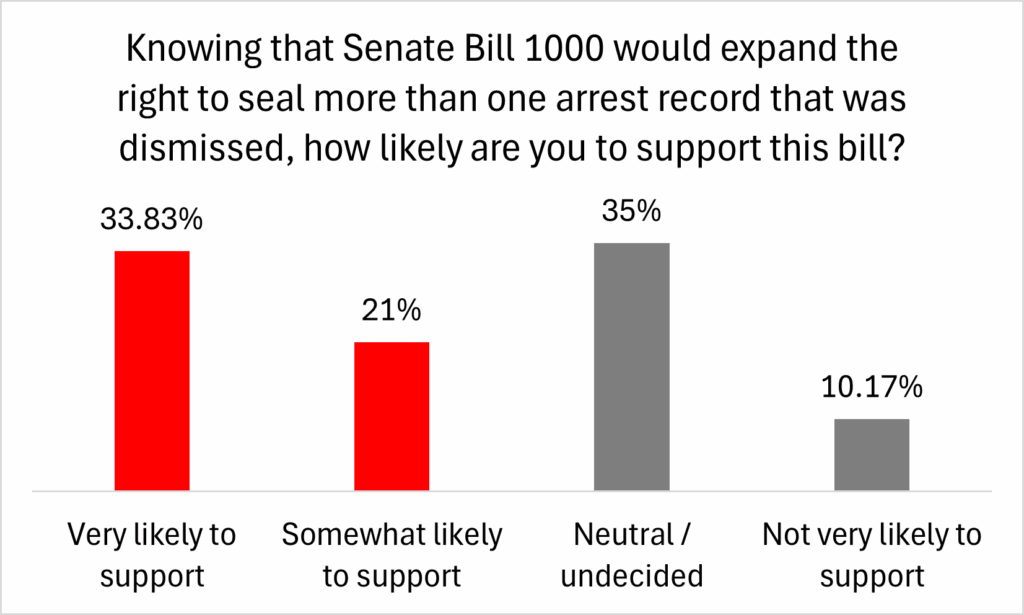
  • More than half of Florida residents support Senate Bill 1000.
  • Floridians could lose $3.1B every year by skipping expungement.

Our Respondents

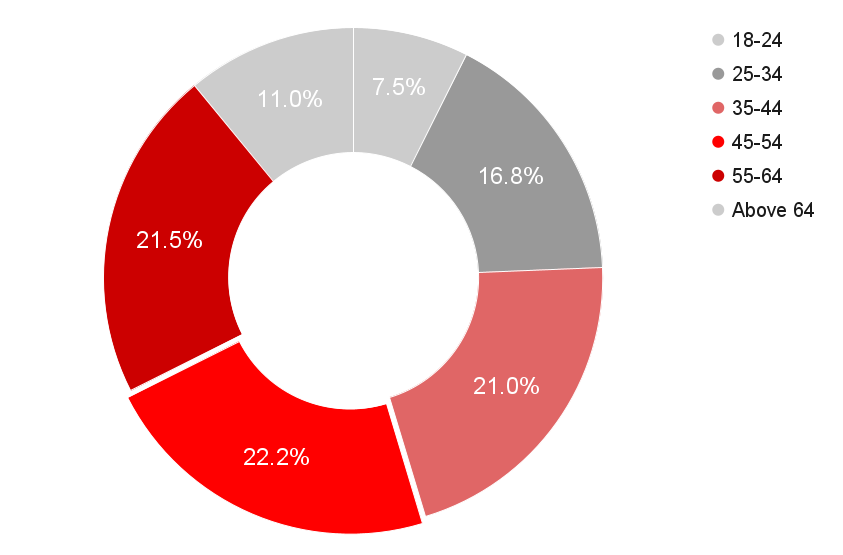
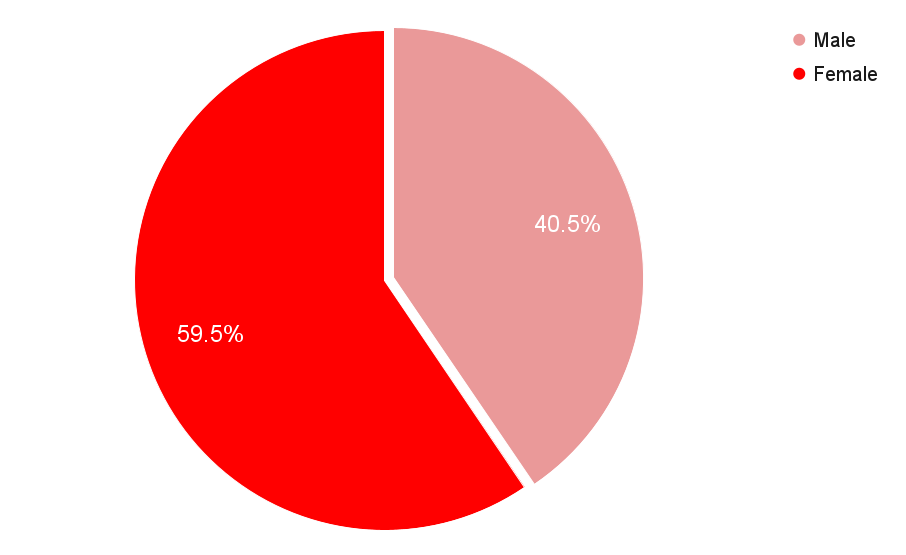
Our survey respondents varies in different group but 65% of them are from 25 to 64. Meanwhile, female accounts for 60% of the respondents.

Age

survey respondents by age

Gender

survey respondents by sex

Survey Results

erasethecase's survey quest 1
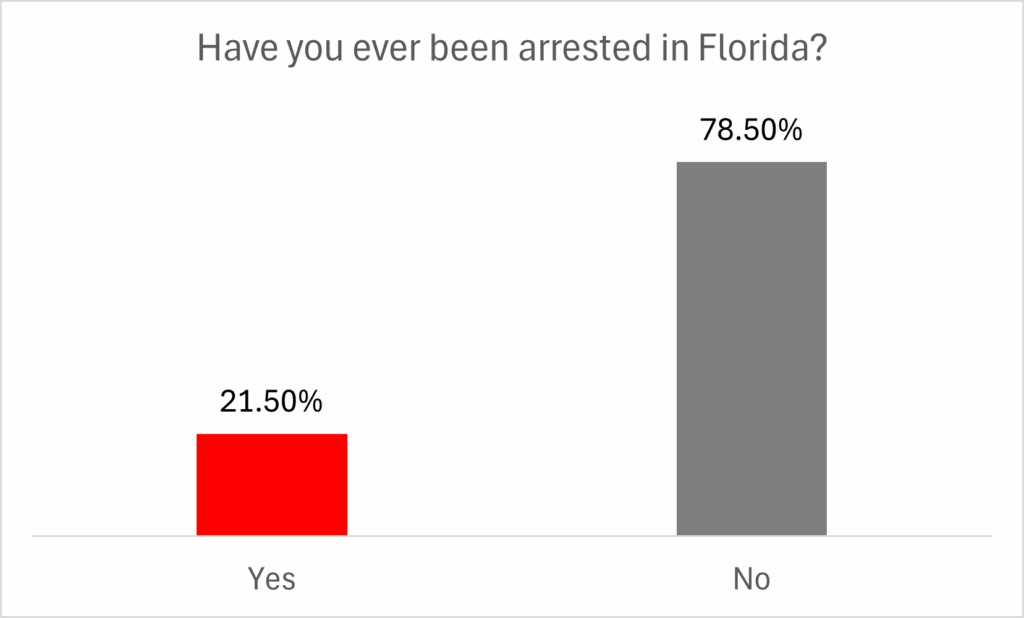
On average, 22% of Floridians used to be arrested in Florida.

According to the survey, 1 in 4 Floridians once carried the burden of an arrest record. This mirrors the national trend, where roughly 1 in 3 U.S. adults carries some form of criminal record (Brennan Center for Justice). Even without a conviction, these records appear in background checks, limiting opportunities for jobs, housing, and education, which makes expungement a critical step toward a clean slate.
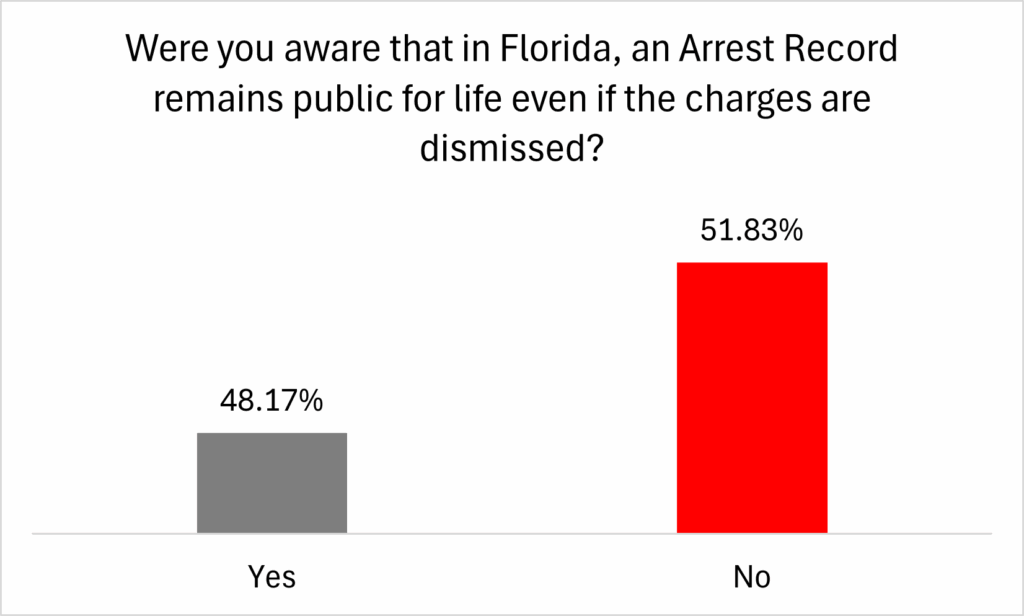
1 in 2 Floridians don’t know that an arrest record remains public for life, even if charges are dismissed.

Half of Floridians don’t realize that an arrest record remains public for life, even when charges are dismissed. This gap in knowledge is dangerous because employers, landlords, and schools still see those records in background checks. Without understanding expungement, many people unknowingly carry barriers that limit careers, housing, and education long after their case is closed.

etc's survey quest2
erasethecase's survey quest 3
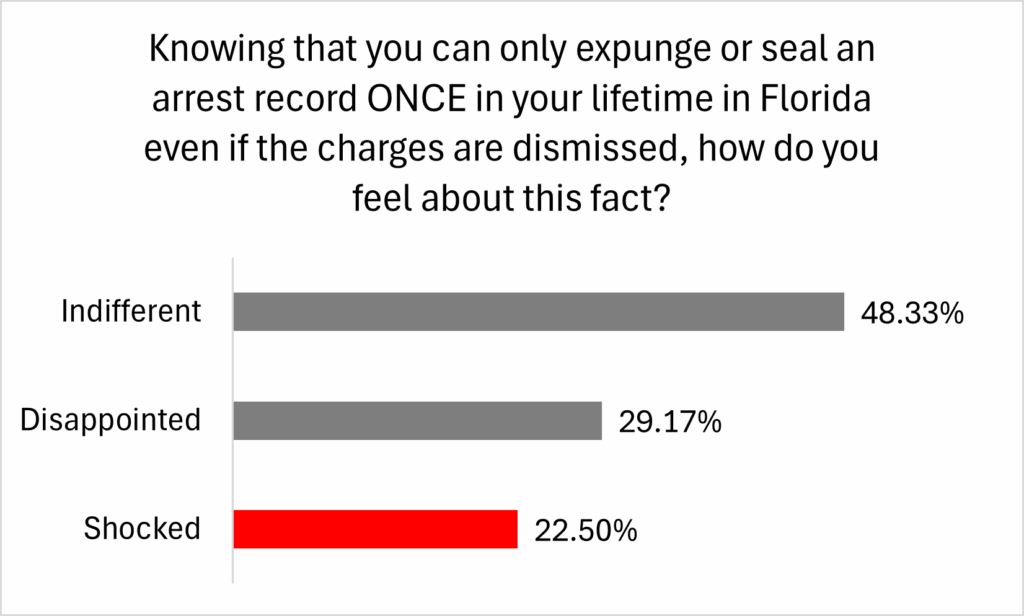
23% are shocked that they can only expunge once.

Nearly 1 in 4 Floridians are shocked to learn they can expunge only one record in their lifetime. This restriction leaves thousands stuck with old arrests they cannot clear. A recent proposal, Senate Bill 1000, aimed to expand eligibility, but lawmakers voted it down, keeping Florida one of the most restrictive states in the nation. The failure of this bill is a setback for second-chance reform, leaving tens of thousands without hope for broader relief.

55% of Floridians support Senate Bill 1000.

Nearly 55% of Floridians support Senate Bill 1000, showing that a majority of residents want broader access to expungement. Senate Bill 1000 was a 2025 Florida bill that proposed allowing people to expunge more than one criminal record in their lifetime. Public backing at this level makes the legislature’s rejection of the bill even more significant. The disconnect between voter sentiment and state policy creates a pressing storyline for second-chance reform, highlighting how thousands remain burdened by lifelong records despite majority support for change.

erasethecase's survey quest 4
erasethecase's survey quest5
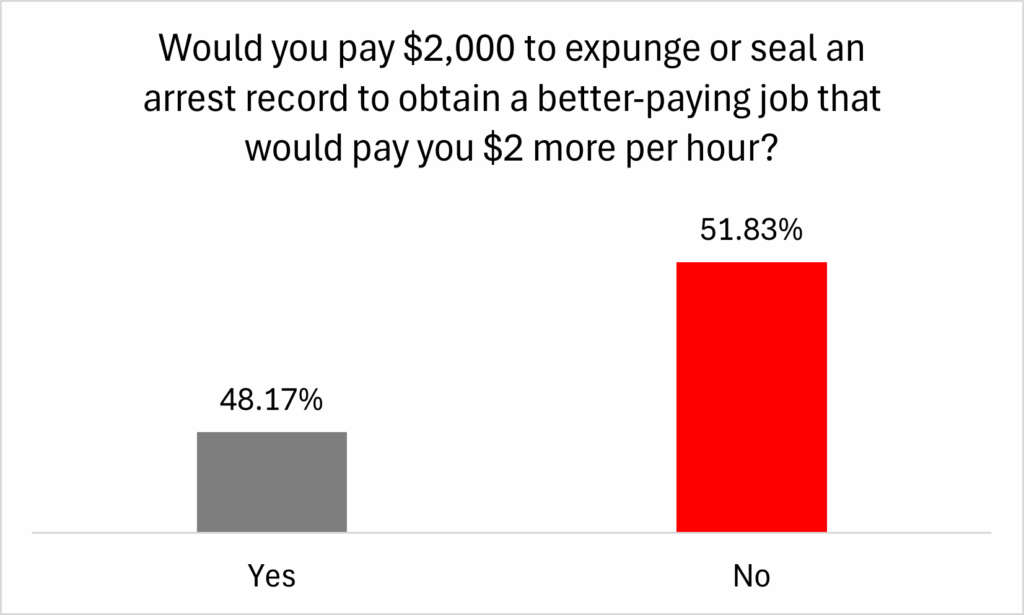
Floridians could lose $3.1B every year by skipping expungement

In our survey, nearly half of Floridians said they would not invest $2,000 to expunge a record, even though clearing that record could unlock higher-paying jobs. Just a modest $2/hour raise adds up to about $4,000 in extra income per person each year. With about 2.4 million Floridians carrying records, and only 65% eligible for expungement, if even half of them miss out on those opportunities, it translates into $3.1 billion in lost wages every year.

This underscores how short-term costs overshadow long-term financial benefits for many residents—and why record clearance reform isn’t just about second chances, but also about Florida’s economic future.

Discussion

Florida’s expungement landscape reveals a significant gap between public need, public awareness, and public policy. Nearly one in four Floridians has an arrest record, yet half of residents are unaware that such records remain public for life, even if the charges are dismissed. Many are surprised to learn that they can only expunge one record. Despite 55% of Floridians supporting SB 1000, the 2025 bill aimed at expanding access to expungement, lawmakers rejected the reform, leaving the state among the most restrictive in the nation. 

The consequences extend far beyond the courtroom: arrest records hinder employment opportunities, limit housing options, suppress annual income by thousands of dollars, and contribute to billions in lost wages statewide. While the demand for expungement continues to grow, misconceptions and legislative inaction keep many Floridians trapped by past mistakes. These findings confirm what justice advocates and economists have long argued: that reforming expungement laws in Florida is not only a matter of fairness but also an issue of economic urgency.

These findings confirm what we see daily: Floridians are being held back by records they don’t realize can be cleared. Expungement is not just about justice, it’s about unlocking economic opportunity

Survey Methodology

This survey was conducted by Erase The Case in September 2025 using Pollfish, with a sample of 600 Florida residents aged 18 and older. Respondents answered multiple-choice and scenario-based questions regarding their understanding of expungement and their attitudes toward reform movement and progress. The sample was geographically targeted to Florida and aimed to capture a diverse cross-section of residents. Percentages reported herein have been rounded to the nearest whole number. Statewide economic estimates presented in this report are not drawn directly from survey responses but are modeled using Florida’s workforce size, average wage assumptions, and eligibility data derived from Erase The Case’s internal practice experience. Workforce data are sourced from the U.S. Bureau of Labor Statistics (FRED, July 2025).

How We Calculate The $3.1B Loss in Wages:

To contextualize survey findings, we estimate the potential annual wage losses resulting from unexpunged criminal records:

  • Workforce Size: Florida’s employed population is ~10.8 million (BLS, 2025).
  • Prevalence of Records: Approximately 22% of the workforce has a criminal record, or ~2.38 million workers.
  • Eligibility for Expungement: Based on Erase The Case’s internal expungement case data, approximately 65% of individuals with records qualify, or ~1.54 million workers in Florida.
  • Conservative Adoption Rate: Assuming only half of those eligible realize tangible job benefits post-expungement, ~772,000 workers would benefit.
  • Wage-Bump Assumption: A modest $2/hour raise translates to ~$4,000 in additional annual income per person (40 hours/week × 50 weeks).
  • Aggregate Impact: Collectively, this results in an estimated $3.1 billion in lost wages every year for Floridians when records remain unexpunged.

Sharing This Survey

The 2025 Florida Expungement Survey was created to shed light on the challenges Floridians face with criminal records and to support meaningful conversations about second-chance reform. We welcome journalists, researchers, nonprofits, and community leaders to use these findings in their work.

If you cite or share this data, please include attribution to Erase The Case and link back to this page so others can access the full report.

For media inquiries, expert commentary, or requests for additional insights, contact:

Downloadable formats: Survey Report (PDF)

Trusted process. Proven results.

Our lawyers have provided more expungements than any other law firm in the state of Florida in record-breaking time! But don't just take our word for it.  
READ TESTIMONIALS HERE
phone-handsetcrossmenu